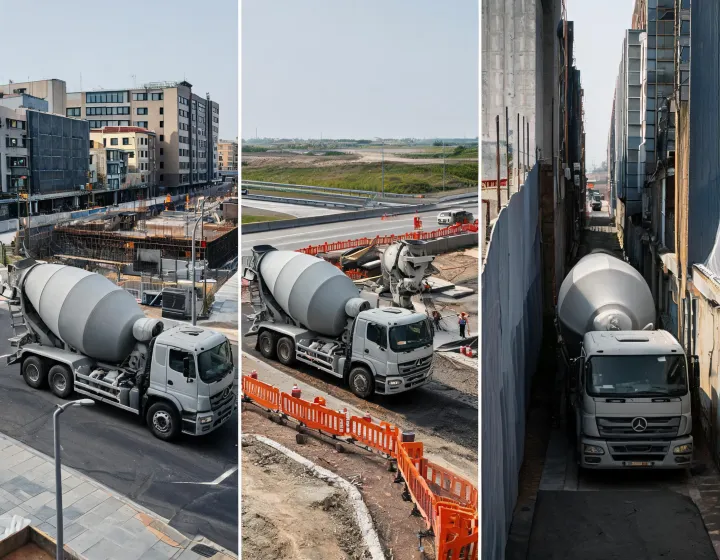
Truck mixer concrete operating profiles

Application translated into purchase fields

Truck Mixer Concrete Requirements by Operating Duty

A truck mixer selected for short urban cycles may need a different chassis, axle distribution, maneuverability, discharge control, cooling, and service plan from one assigned to long-haul infrastructure work. We turn the site and route description into questions that factories must answer on the quotation.

ConfigurationBody, chassis, mixer and controls
RatingsCompleted vehicle, not family maximum
DeliveryDestination, documents and handoff

Application pairs

Match the mixer truck to the actual duty

Profile A

Urban ready-mix cycles

Frequent starts, turns, loading queues, discharge stops, noise constraints, washout access, and limited maneuvering space can shift the priority toward wheelbase, turning behavior, visibility, transmission strategy, control placement, and practical payload.

Profile B

Infrastructure and extended transit

Longer trips, higher ambient temperatures, grades, rough approaches, and sustained operation raise questions about powertrain, cooling, fuel capacity, drum drive, tire and brake configuration, concrete retention assumptions, maintenance access, and recovery planning.

Profile C

Constrained or specialized sites

Tunnels, mines, industrial yards, remote projects, and restricted-access developments may impose dimensional limits, ground-clearance needs, lighting rules, special guarding, low-speed controls, emissions restrictions, or inspection requirements outside a standard road specification.

Method trade-offs that change the quotation

Neither the largest drum nor the lowest ex-works price is automatically the suitable choice. Compare the operating consequence of each option and request the same evidence.

DecisionPotential advantageLimitation to examineVerification path
Larger stated drum volumeMore geometric space or nominal capacityMay not increase legal concrete payload; weight and axle distribution can be limitingCompleted-unit weight calculation, GVWR and GAWR evidence
Integrated pump-mixer packageCombines transport and placement functionsAdds mass, hydraulic demand, complexity and specialized service requirementsSystem layout, axle loads, PTO/hydraulic schedule and duty demonstration
Economy component packageLower initial quotation may fit a defined budgetParts access, service documentation, finish or operating life may differNamed component schedule, warranty exclusions and destination parts plan
Premium component packageMay offer preferred controls, support or documented component originHigher price does not by itself prove duty fit or destination supportLike-for-like component, evidence, service and total-cost comparison

Evidence questions

What should be tied to the exact vehicle?

Application notes guide the RFQ, but the supplier response must identify the configuration behind each rating or document.

Weight ratings and payload

Request GVWR, front and rear GAWR, completed-unit curb or tare basis, concrete density assumption, water and fuel allowances, occupants, options, and axle distribution. A truck family maximum is not the quoted mixer's rating.

Mixer body and hydraulic system

Request the capacity terminology, body data sheet, drum and blade description, drive system, pump and motor schedule, control locations, water system, chute arrangement, and emergency provisions that apply to the offered body.

Model and destination documents

Request documents by chassis, engine, mixer body, model year, and destination. FMVSS or EPA relevance, import eligibility, state registration, and site acceptance need separate qualified review; no generic brochure resolves those decisions.

Turn the pour schedule into a comparable RFQ

Describe route length, grade, access, loading and discharge cycle, concrete density assumption, operating hours, climate, chassis constraints, quantity, destination, and delivery window. Include the exact ratings and documents that must be verified.

Please enter your name.
Please enter a valid email.
Please describe the product specification, quantity, destination, and delivery window.